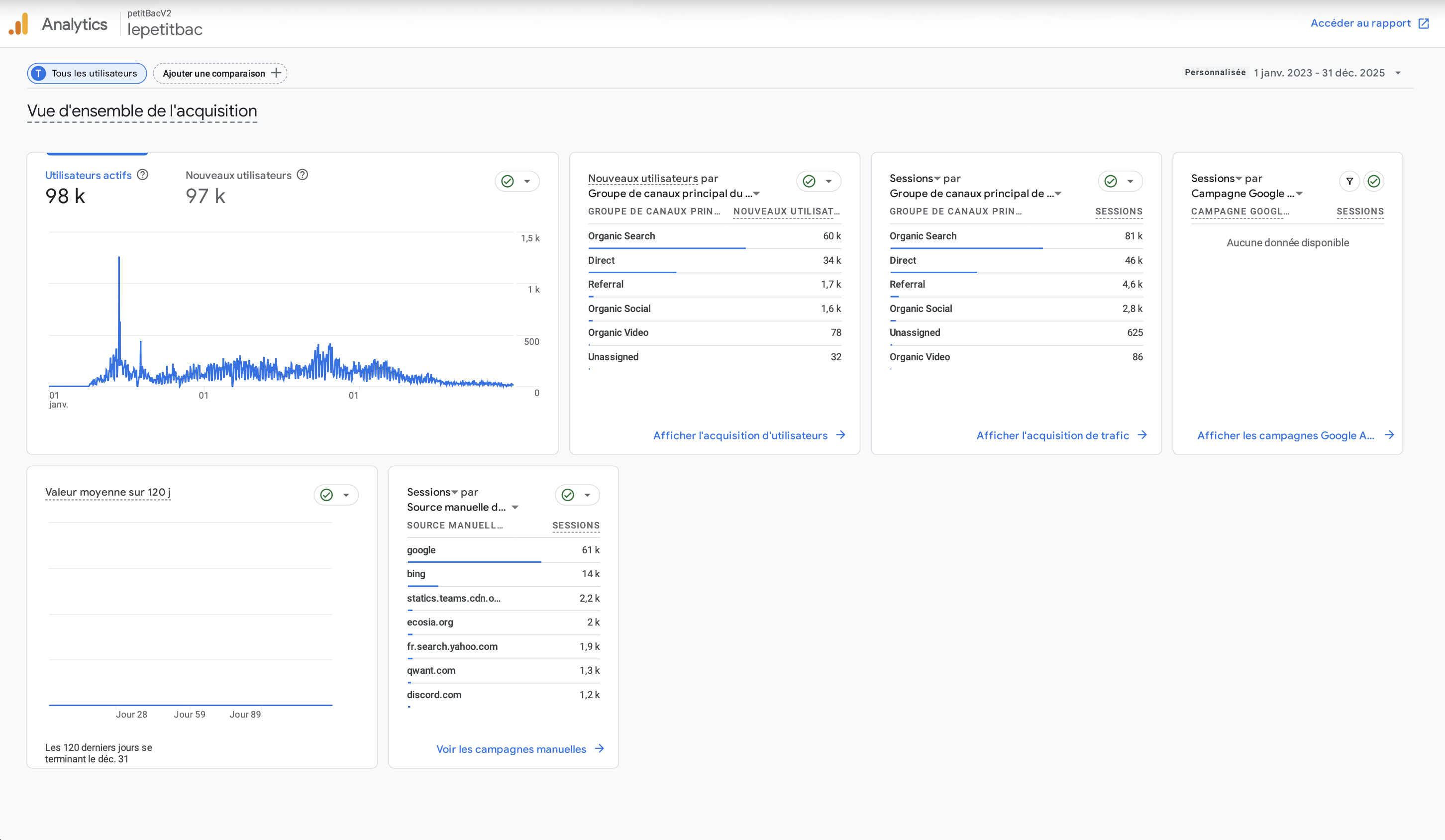
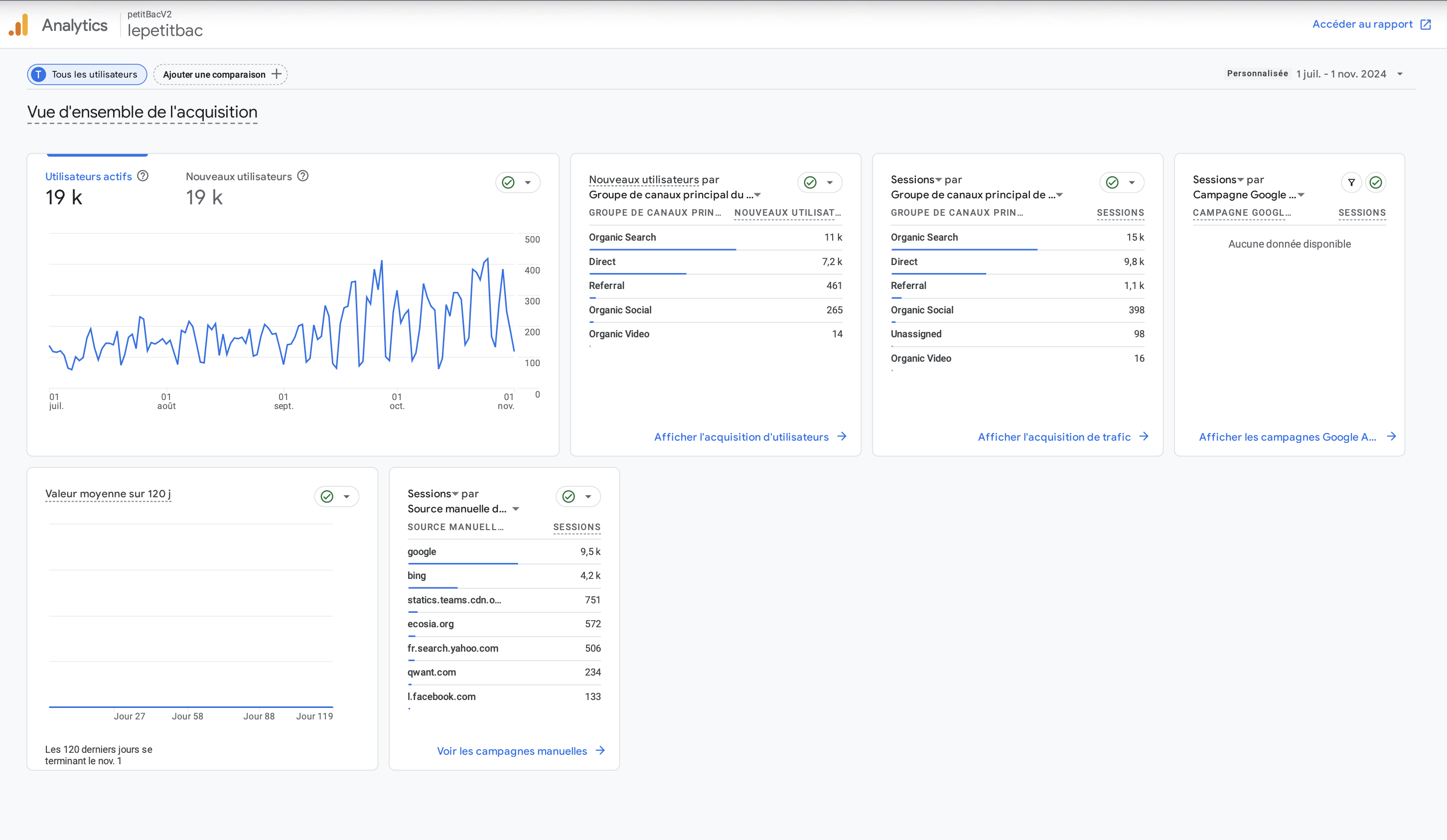
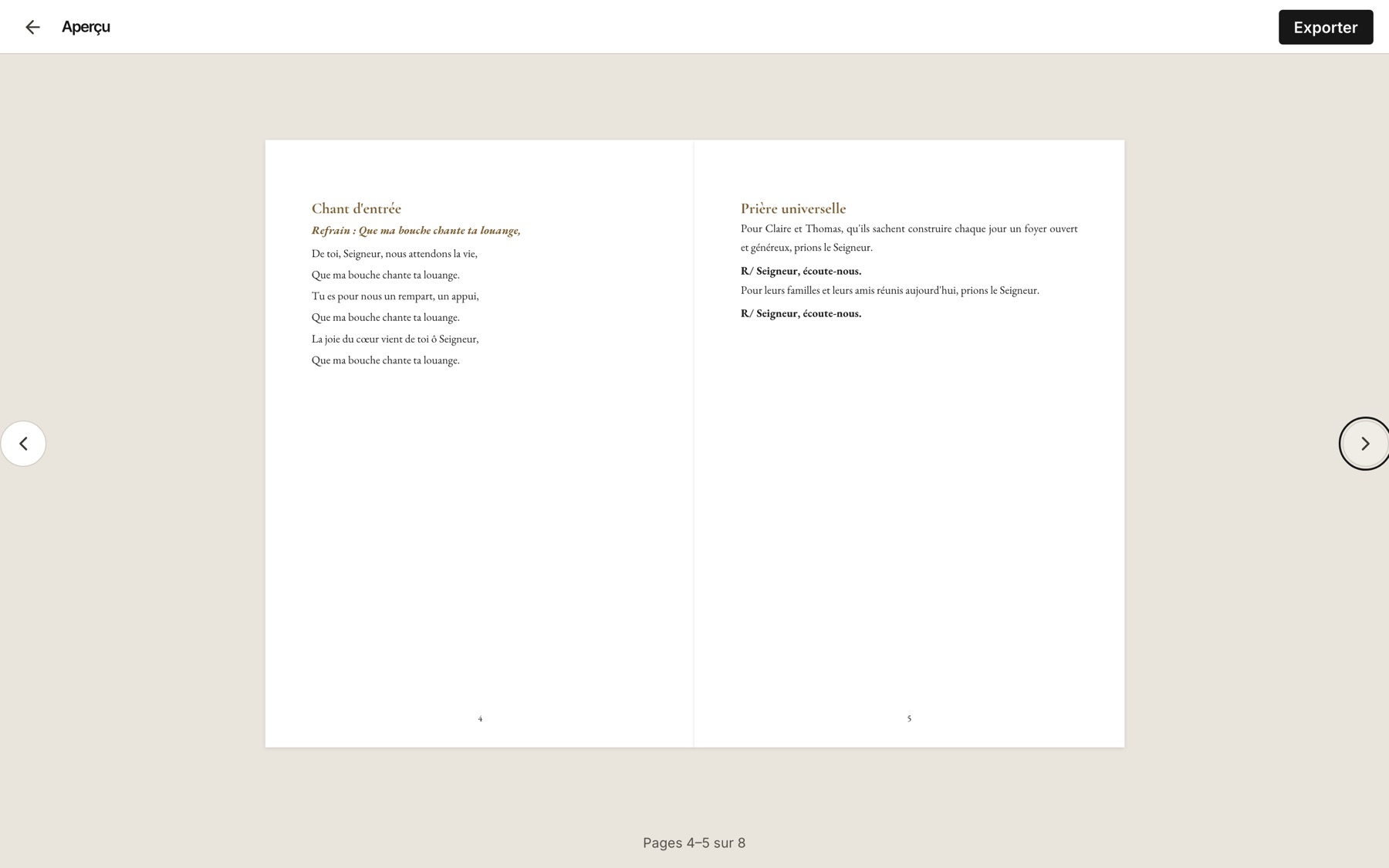
A popular online multiplayer word game (the French version of Scattergories)
built with React and Node.js. The game grew organically to 98k+ active users
over 3 years, driven almost entirely by SEO and word-of-mouth.
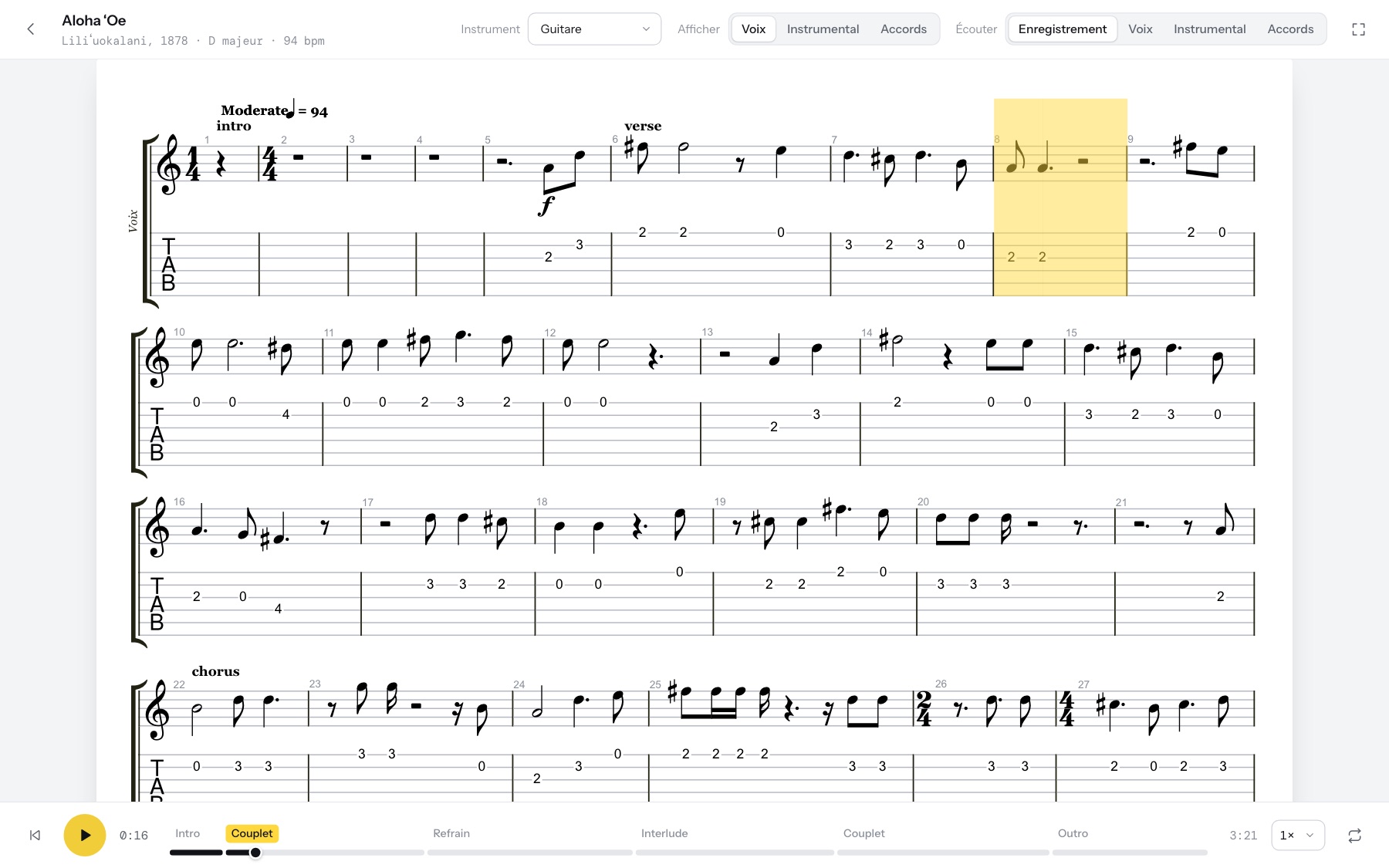
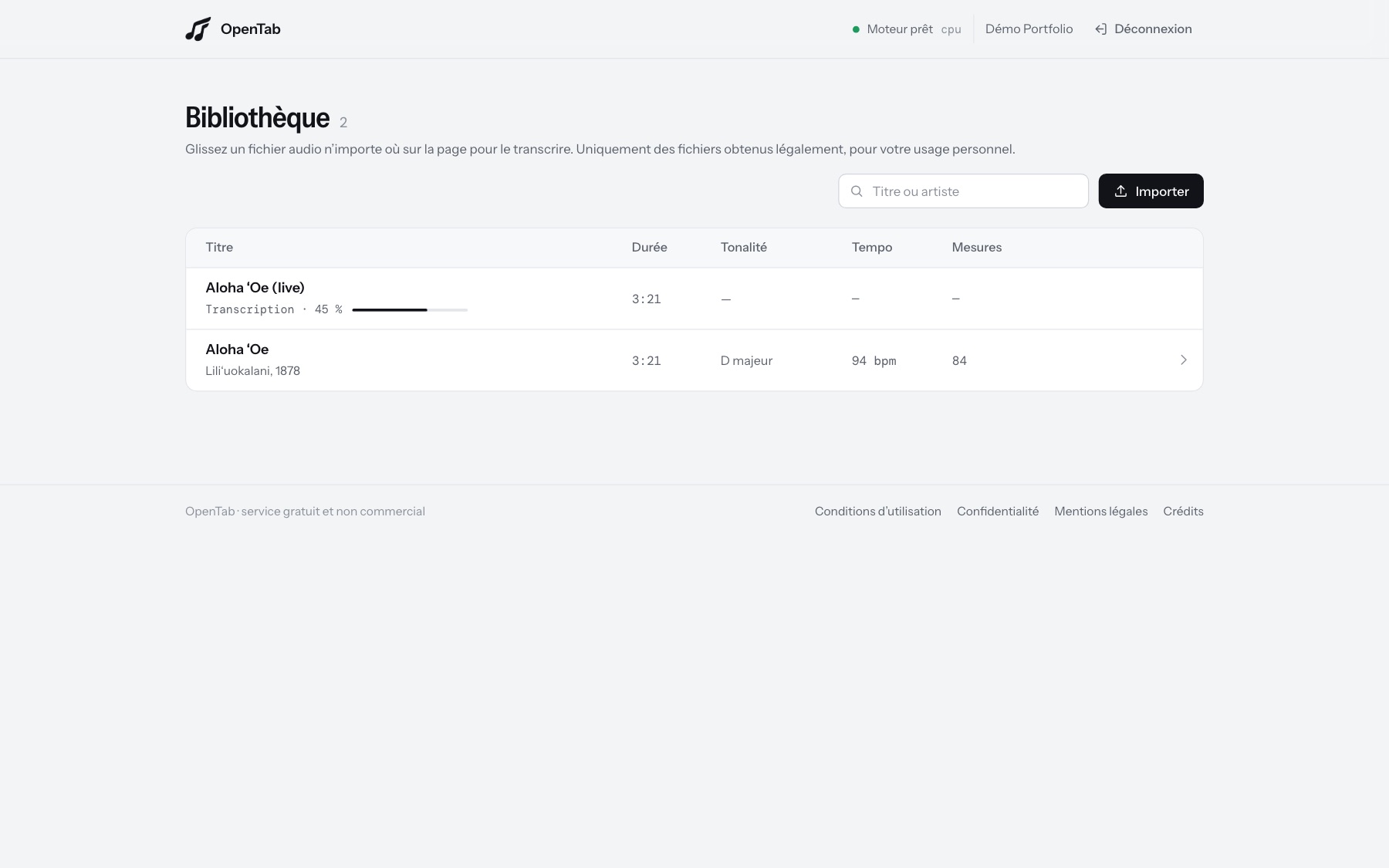
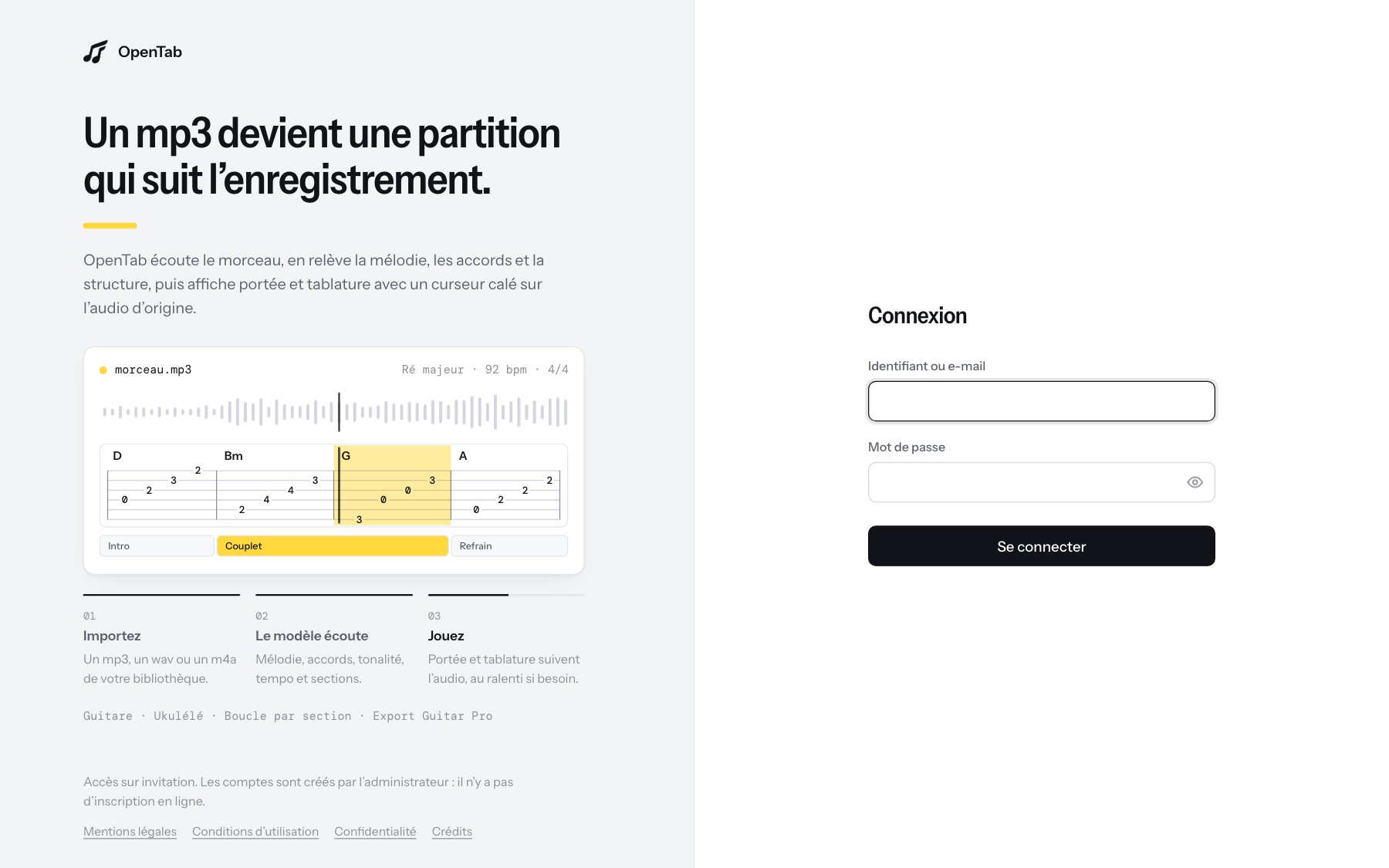
A web app for learning a song by ear. Drop in an mp3: the SheetSage2
AI model picks out its melody, chords, key and structure, and OpenTab
shows staff and tablature for guitar or ukulele, with a cursor locked
bar by bar to the original recording. Self-hosted, private, accounts
by invitation.
AI transcription: melody, chords, key, tempo and sections (intro, verse, chorus) from an mp3, wav, m4a or flac
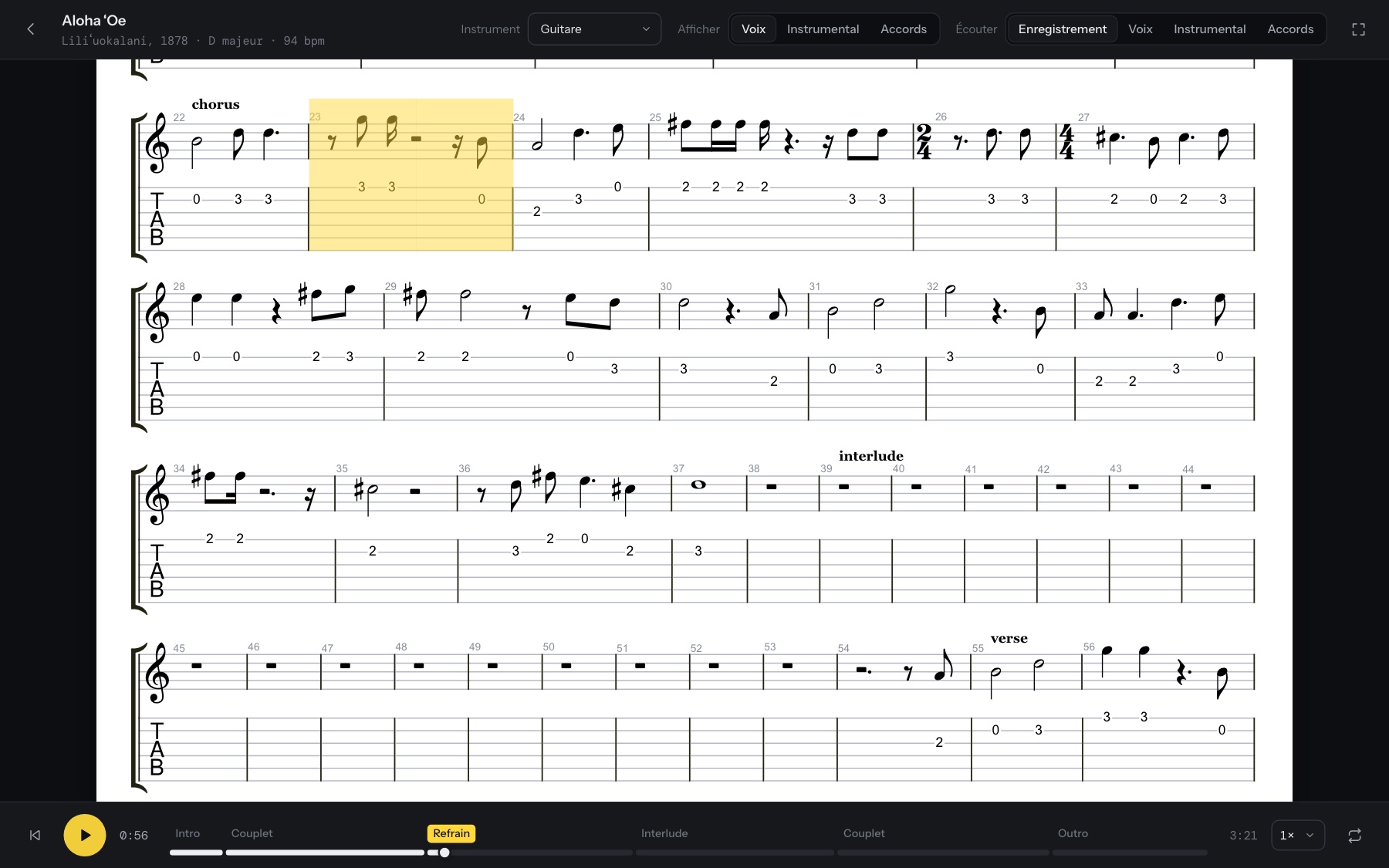
Staff and tablature side by side, for guitar, ukulele or low-G ukulele, with fingerings computed to minimise hand movement
Playback of the original recording with a cursor that never drifts, jump by section, loop and slow-down
Guitar Pro export per instrument, and a percentage progress bar during analysis
How it's built
The model runs in a separate process that stays loaded between songs, under a memory guard that restarts it rather than freezing the machine
One sync point per bar, taken from the downbeats the model detects: the model's grid is the reference, not the written tempo
Private by design (no sign-up, no public sharing) with Keycloak; Docker Compose behind Traefik on my OVH server
2026
Karnet
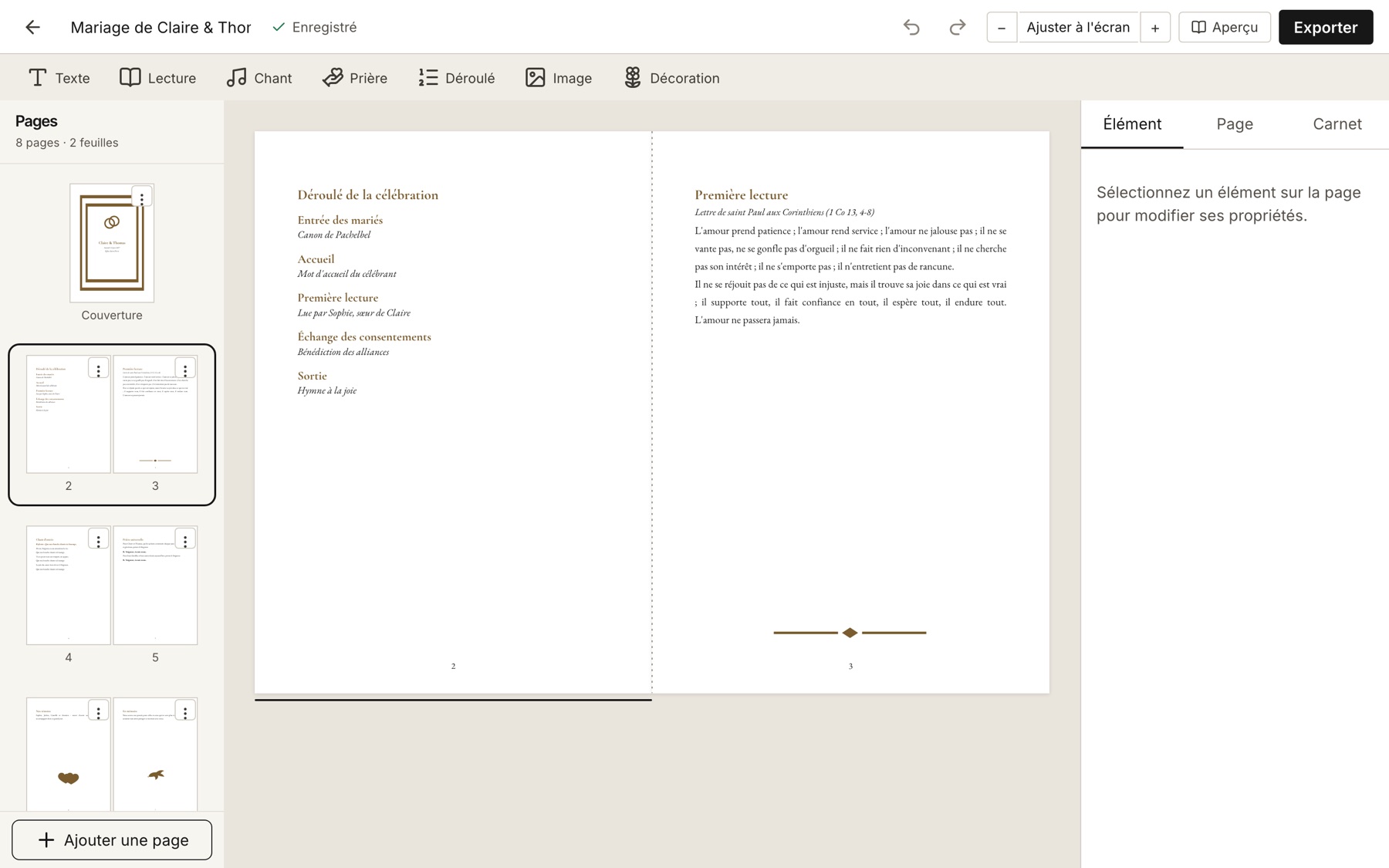
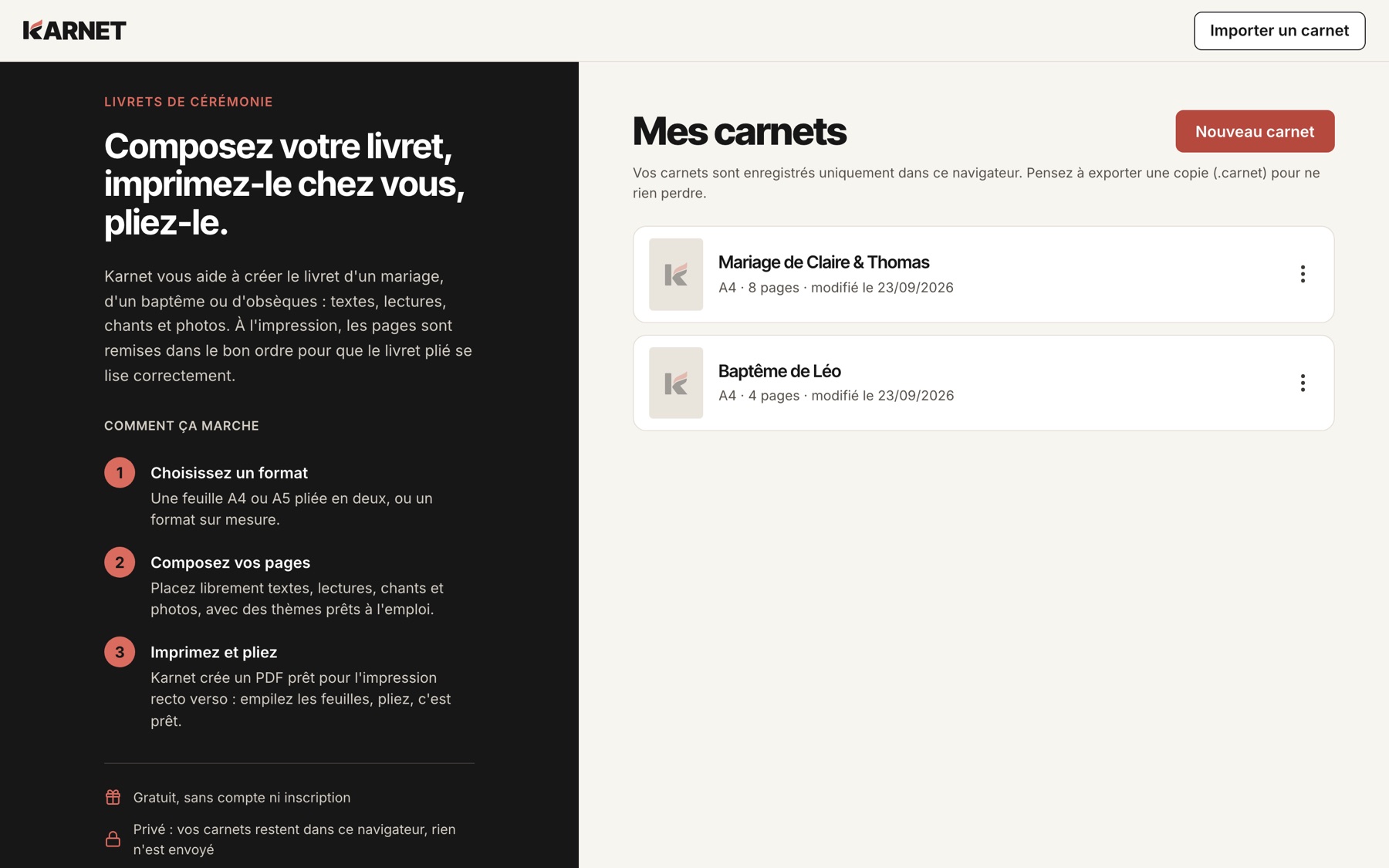
A free, account-less web editor to design the booklet handed out at a
wedding, a baptism or a funeral: readings, songs, prayers, photos. Karnet
exports a PDF that, printed double-sided, folded and stapled in the middle,
comes out in the right page order on the first try. Everything runs in the
browser, on a computer or a phone: no application server, no upload.
Automatic imposition: pages are laid out on folded sheets (4 to 48 pages, A4 or A5), with blank pages added when needed
Free-form layout on facing pages, with ceremony-ready blocks (reading, song, prayer, order of service), croppable photos and decorations
An in-house text layout engine: every line breaks at the same place on screen and in the PDF, in Chrome, Firefox and Safari
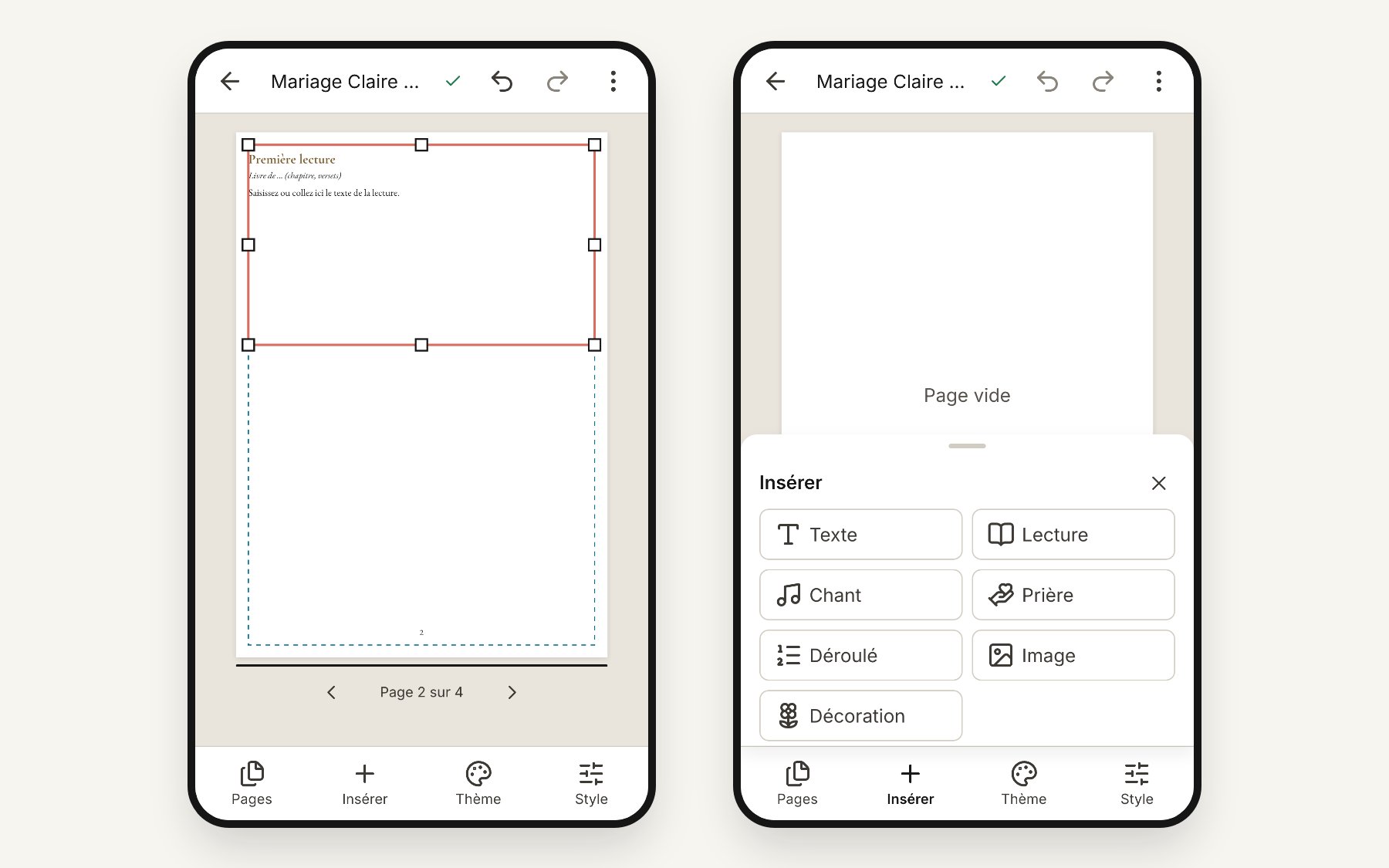
Phone and tablet mode: one page at a time with swipe, bottom-sheet panels, touch gestures (pinch, long-press, double-tap) and editing above the virtual keyboard
Private by design: no content ever leaves the device, local autosave, a .carnet file to move between computers, and offline support (PWA)
How it was built
Planned with the BMAD method (PRD, architecture and 21 ADRs, stories with disjoint file scopes), then implemented by AI agents working in parallel in isolated git worktrees
Every merge independently verified: typecheck, lint, unit tests and Playwright e2e on desktop, iPhone, Android and iPad
PDFs generated client-side in a Web Worker from the same display lists as the screen; self-hosted behind Caddy and Docker
Open Source · Collaboration
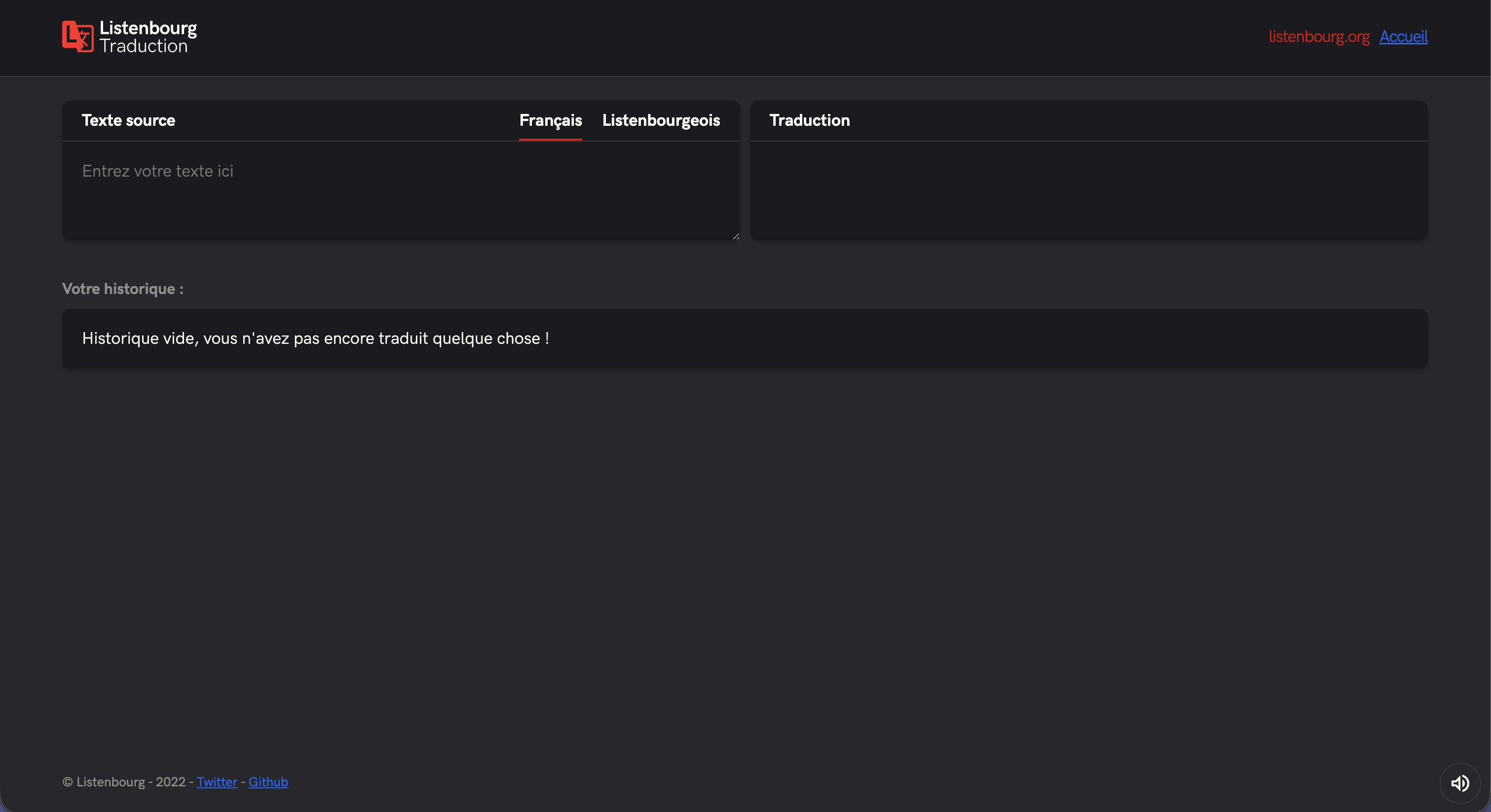
Listenbourg: Translation API
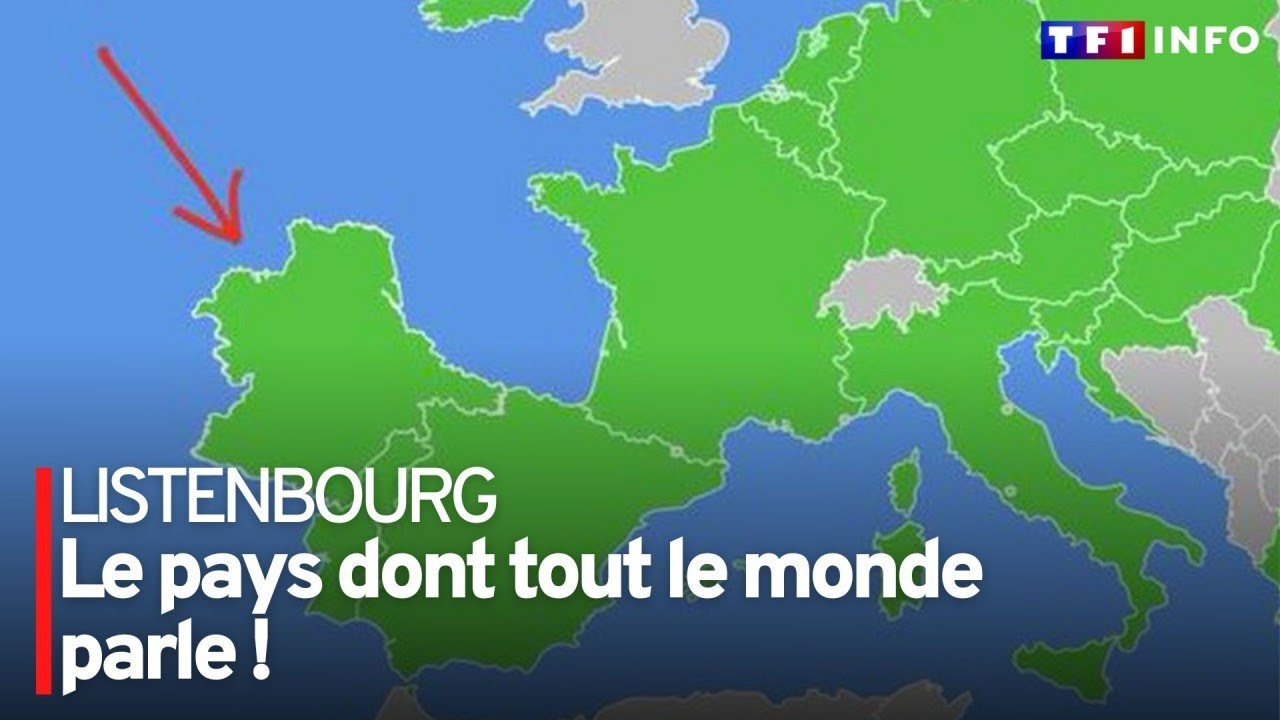
Listenbourg started as a viral French internet phenomenon in November
2022: a fictional country imagined collectively online, which quickly grew
into a collaborative cultural project. A community of contributors built an entire
ecosystem around it: an interactive map, an identity card generator, a
constructed language (Listenbourgeois), and the open source translator I
worked on. The phenomenon reached national media coverage, including a
tongue-in-cheek weather forecast on TF1 by meteorologist
Tatiana Silva, as well as segments on France 3 and France Info.
Designed and implemented the translation algorithm matching French input to Listenbourgeois with a scoring system that returns a primary translation and ranked alternatives
Built the Node.js / Express backend exposing the public POST and GET /translate endpoints consumed by the community frontend
Developed the words database API (Traducteur-DB-API) used to add, edit and serve translated entries to contributors
Collaborated remotely with a distributed team of developers, linguists and designers organising the work across the Listenbourg GitHub organisation
Why it matters
Real-world experience shipping production code as part of an open source collective rather than as a solo developer
The translation engine had to handle a constructed, still-moving vocabulary, so it relies on fuzzy matching and confidence scoring rather than strict dictionary lookups
Public API consumed by an independent frontend team, requiring clear contracts, versioning discipline and documentation